Wellness Guide
Antioxidants for Everyday Wellness: Why They Matter
Published
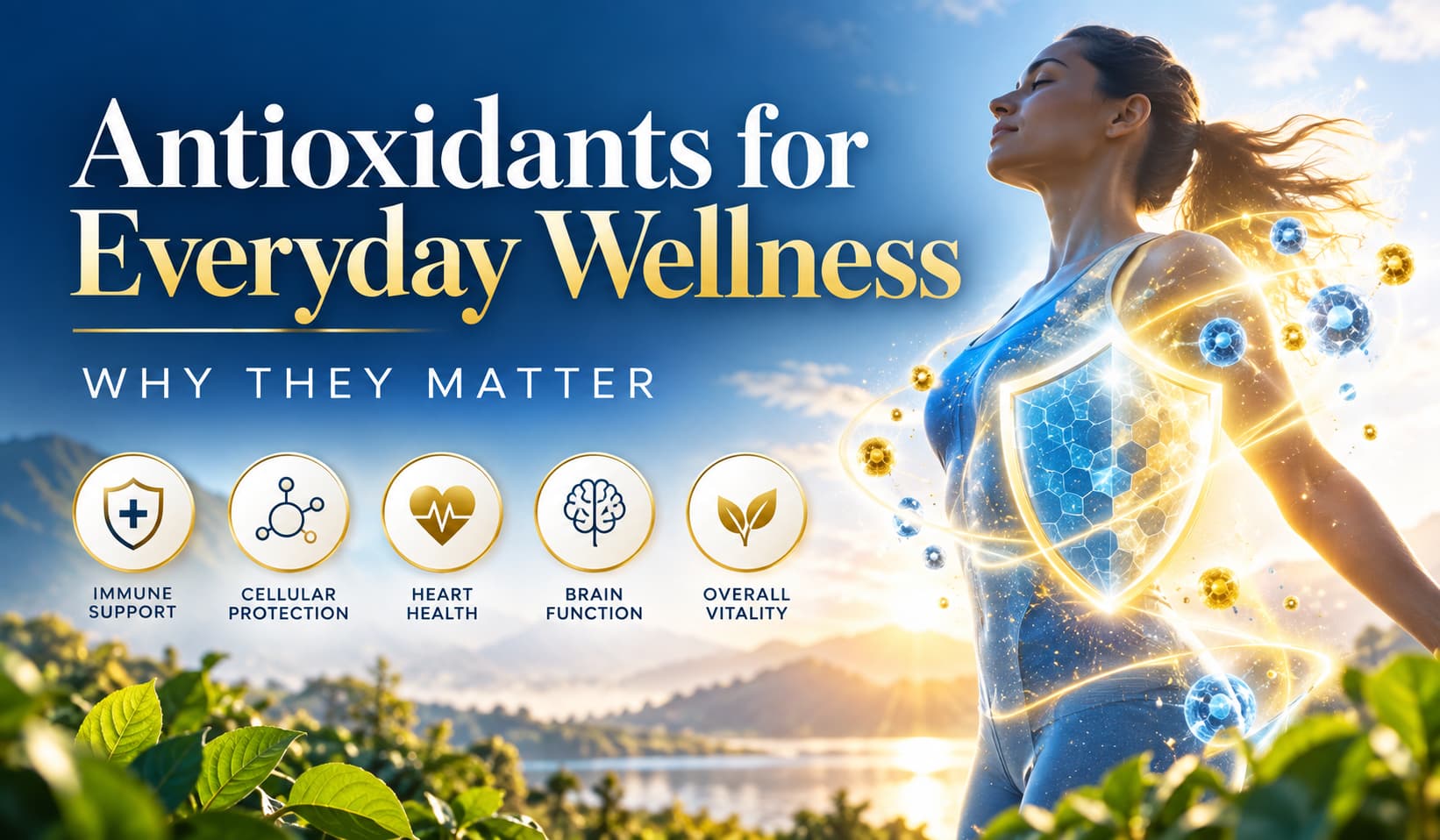
Antioxidants are frequently mentioned in wellness content. They appear in discussions about nutrition, everyday health habits, and beauty-from-within routines. Even so, many buyers still ask a basic question: What are antioxidants, and why do people care about them?
This guide explains the topic in a simple, practical way without treating “antioxidant” as a cure-all. Readers comparing available formats can also browse the site’s wellness supplements hub.
Wellness at a Glance
- Antioxidants are commonly discussed in relation to oxidative stress.
- They occur naturally in many foods.
- Some supplements also contain antioxidant ingredients.
- Buyers often choose antioxidant products for convenience or routine support.
- A product should be evaluated by its actual ingredients, label information, format, and realistic intended use.
What Are Antioxidants?
Antioxidants are compounds commonly discussed in relation to oxidative processes in the body. In simple terms, they are part of the broader conversation around how the body handles oxidative stress.
Antioxidants can be found in many foods, including:
- fruits
- vegetables
- leafy greens
- berries
- nuts
- seeds
- certain beverages
Some dietary supplements also contain ingredients that are marketed or studied in antioxidant contexts.
Why Do People Look for Antioxidants?
People become interested in antioxidants for different reasons. Common motivations include wanting to build a more intentional wellness routine, improve dietary variety, or choose products that fit a broader “beauty from within” or everyday wellness approach.
It is important, however, not to turn general antioxidant interest into exaggerated disease-prevention or treatment claims.
Illustrative Example: Food First, Convenience Second
Consider a busy adult who is trying to improve a daily routine.
A practical day might include:
- fruit with breakfast
- vegetables at lunch
- water throughout the day
- a balanced dinner
- an optional supplement chosen for convenience
The supplement does not erase the importance of food. Instead, it may be used because a pre-portioned format feels easier to maintain.
Antioxidants in Everyday Foods
Foods often discussed for antioxidant content include:
- blueberries
- strawberries
- citrus fruits
- spinach
- kale
- colorful vegetables
- nuts and seeds
- tea
A varied diet remains an important foundation, even when a supplement is part of the routine.
Where Supplements May Fit
Some buyers prefer supplements because they want:
- a portable format
- a structured serving routine
- convenience on busy days
- clearly labeled ingredients
- an easy way to compare one product with another
The decision should still be based on the product label rather than on a broad word such as “antioxidant.”
Glutathione in the Wellness Conversation
Glutathione is frequently discussed in antioxidant-related wellness content. Royale’s Toning Liposomal Glutathione includes L-Glutathione Yeast Extract and also lists Vitamin C, Vitamin E, collagen peptide, and biotin in the documented product information.
Royale presents several product highlights for Toning Liposomal Glutathione, including antioxidant protection and other wellness-oriented benefits. These are product-positioning claims and should not be interpreted as guaranteed individual outcomes or therapeutic claims.
The product also carries the statement “NO APPROVED THERAPEUTIC CLAIMS.”
What Buyers Should Compare
When reviewing an antioxidant-oriented supplement, compare:
- exact listed ingredients
- amount per serving or stick when clearly provided on the label
- serving format
- directions
- precautions
- storage instructions
- whether the product fits the buyer’s current routine
For Toning Liposomal Glutathione, documented label information includes:
- L-Glutathione Yeast Extract — 100 mg
- Micro Fish Collagen Peptide — 500 mg
- Vitamin C — 450 mg
- Vitamin E — 3.3 mg α-TE
- Biotin — 30 μg
Buyers should refer to the current product packaging for the latest information.
“Beauty From Within” Without Overpromising
Some buyers are interested in antioxidant supplements because they connect them with skin appearance or beauty routines. It is reasonable to discuss that buyer intent, but wellness content should avoid implying guaranteed whitening, anti-aging, or medical outcomes unless a specific claim is clearly supported and properly qualified.
A useful approach is to separate:
- what the product label says
- what Royale presents in its product materials
- what general nutrition research discusses
- what an individual buyer may personally prefer
Before Buying, Ask These Questions
- What exact ingredients am I buying?
- Does the serving format fit my routine?
- Have I reviewed the directions and precautions?
- Am I using a supplement as support rather than a replacement for balanced eating?
- Am I expecting realistic outcomes?
- If I have a medical condition or take medication, should I discuss the product with a healthcare professional?
Product Relevance
Readers comparing antioxidant-related wellness products on RoyaleProductsClub.com may find these pages useful:
- Toning Liposomal Glutathione
- Pure Organic Barley
- Wellness Supplements
These products should be compared based on their own labels and intended formats rather than treated as interchangeable.
Final Thoughts
Antioxidants are a useful wellness topic, but the word alone does not tell a buyer whether a product is appropriate. A better approach is to understand the actual ingredient list, product directions, precautions, and how the product fits into an overall routine.
Food variety, realistic expectations, and clear label reading remain more useful than relying on a single wellness buzzword.
Sources & References
Editorial note: General research sources below support the educational statements in this article. They do not establish the efficacy or suitability of a finished Royale product. Product-specific facts should be checked against the current product label and official Royale materials because formulas, directions, packaging, and availability can change.
General research and product verification
- MedlinePlus — Antioxidants Supports the general definition of antioxidants, food sources, and the need to avoid assuming supplements reproduce the benefits of fruit- and vegetable-rich diets.
- NCCIH — Antioxidant Supplements: What You Need To Know Supports cautious discussion of oxidative stress, antioxidant supplements, evidence limitations, and potential high-dose risks.
- NIH Office of Dietary Supplements — Vitamin C Fact Sheet for Health Professionals Supports general information on Vitamin C as an essential nutrient and physiological antioxidant.
- RoyaleProductsClub.com — Toning Liposomal Glutathione Product-specific reference for current documented ingredient amounts, directions, precautions, and product-positioning claims.
Related Guides